Spent last night poking at a picture book idea and the thing that finally made it work was planning the whole book on one sheet of paper before writing any real sentences.
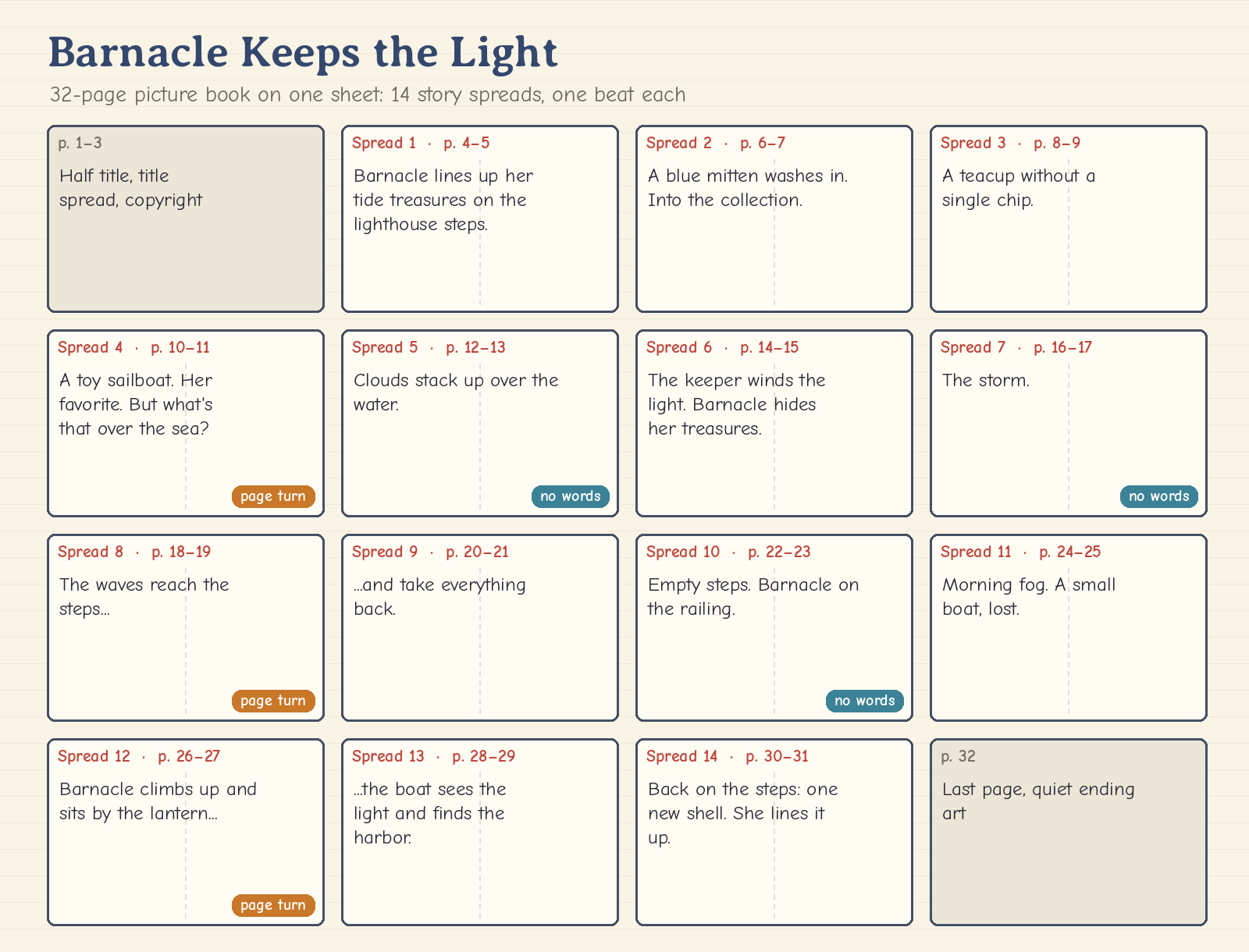
A standard picture book is 32 pages. Once the half title, title spread and copyright take pages 1 to 3, you’ve got 14 spreads for the story (pages 4–5 through 30–31), plus page 32 for a quiet last image. So I drew 16 boxes on a sheet, greyed out the first and last, and gave every spread exactly one line.
A few things I noticed while filling it in:
- One beat per spread. If a box needs two sentences to make sense, it’s either two spreads or too much story.
- The page turn is the best tool you have. I put the question or the cliffhanger on the right-hand page and the answer after the turn (“The waves reach the steps…” then “…and take everything back.”).
- Three spreads have no words at all. The storm doesn’t need narration.
- The last spread echoes the first one, just changed.
My test story is Barnacle Keeps the Light: a lighthouse cat who collects whatever the tide brings in, loses all of it in a storm, and ends up being useful in a way she didn’t plan. Here’s the sheet:
Seeing all 14 spreads at once made it obvious where the middle sagged, which I’d never have spotted in a manuscript. Does anyone else plan page turns first, or do you write the text and sort the spreads out afterwards?