I’ve been sketching a fantasy trilogy and kept tripping over my own magic rules. By chapter 12 my main character could do things that should have flattened her back in chapter 3. So I stopped keeping the rules in my head and gave every power its own three-line card:
- What it does, in one sentence.
- What it costs, and the cost has to be something the character actually loses.
- What it can never do.
My setup is salt magic in a harbor city. A salt-binder can seal a door, a wound or a promise. Each binding costs one small, real memory, and the binder never gets to pick which one goes. And salt can’t bind anything that’s still moving.
That third line ended up doing most of the plotting for me. The rooftop chase can’t end with a binding because the thief is running, so she has to trip him first. The finale needs her to bind the tide itself, which means she has to wait for slack water, and that waiting scene became my favourite part of the outline.
Two small things I picked up along the way:
- At the bottom of the card I keep a running list of every memory she’s lost so far. It’s the best continuity check I’ve found for book two, because readers will absolutely notice if she remembers her mother’s face after giving it up.
- A cost that can be paid back later stops feeling like a cost. Once I let her get a memory back in a draft scene, every binding after it felt cheap, so that scene is gone.
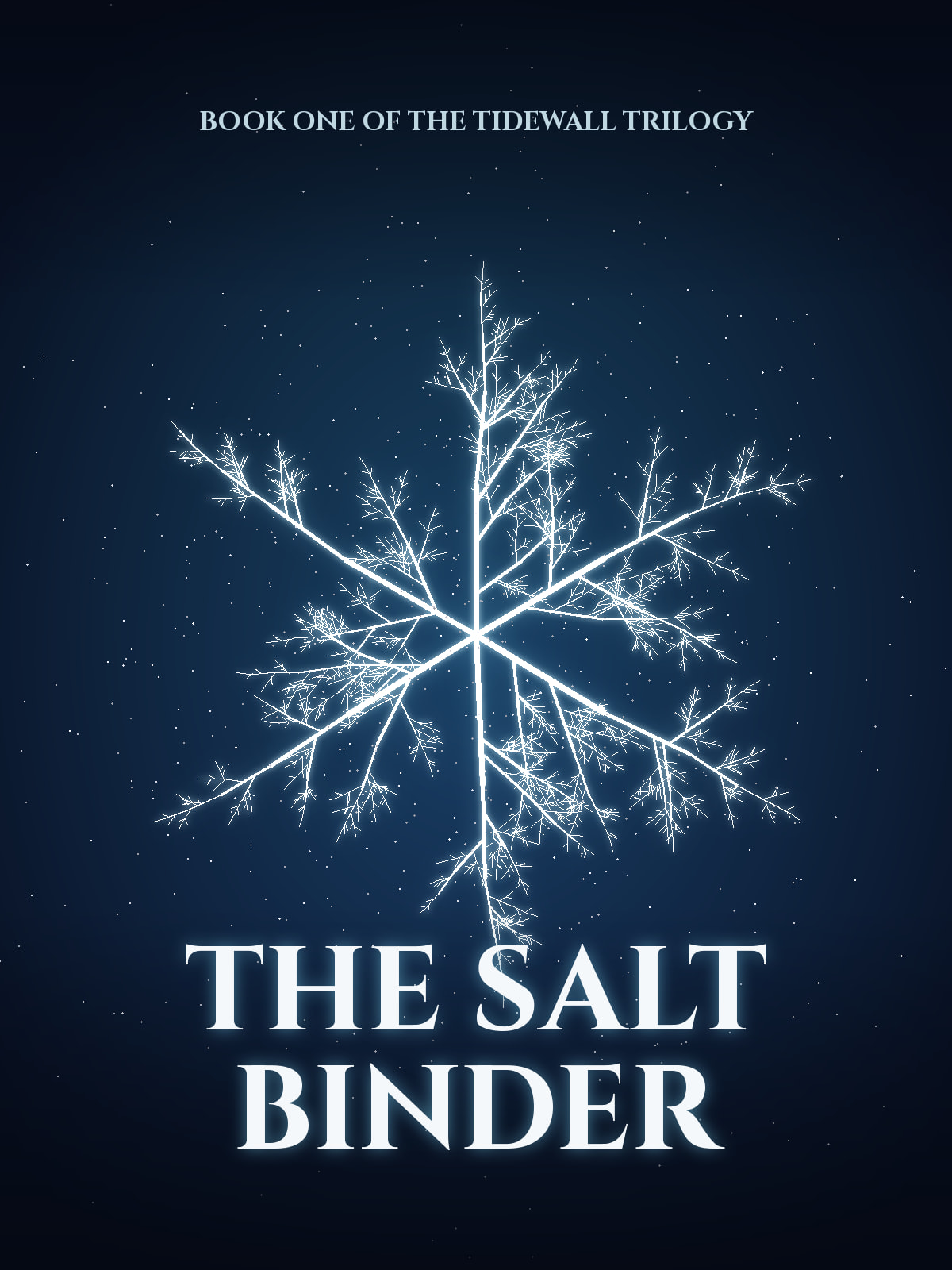
I also made a cover for book one while I was at it:
Do you keep your magic rules written down somewhere, or do they live in your head until a scene breaks them?